
New Study Examines How Radical Store Transformations Affect Category Sales
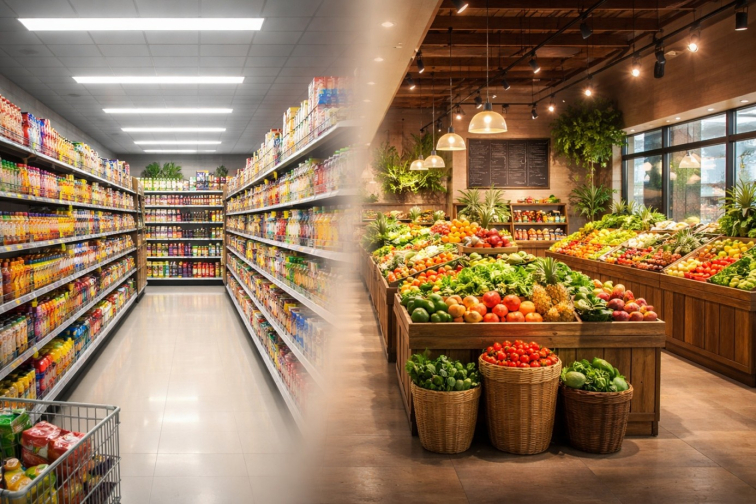
A new study published in the Journal of Retailing by Marleen Hermans, Els Breugelmans, Felix Lehmkuhle, Manfred Krafft, Mirja Kroschke, and Murali Mantrala looks at how radical store transformations affect sales performance at the category level - a topic that has received surprisingly little attention in retail research.
Using a quasi-experimental dataset from a German retailer that shifted from a low-priced, transaction-oriented format to a high-priced, experience-oriented concept, the researchers found that emphasized categories increased by around 18% in sales, while de-emphasized categories declined by 4%. Strikingly, even unchanged categories suffered losses of around 6%. These categories had no alterations to their assortment or shelf presentation.
Why Do Some Unchanged Categories Suffer More Than Others?
The study uses the 8Ps framework of category characteristics. It identifies purchase frequency and penetration as amplifiers of negative effects. At the same time, it shows that prominence helps to buffer them. Prominence is captured by promotion intensity and private label share. Categories high in perishability tend to weather the transformation better.
Implications For Practice
Radical store transformations require careful planning that extends beyond the categories being actively redesigned. Retailers should anticipate spillover effects on unchanged categories and manage them proactively; otherwise, they risk undermining the very gains that the transformation was designed to achieve.
Read the full article here: What is happening to my categories? Differential effects of a radical store transformation on category sales - ScienceDirect